

Industrial-Grade Off-Grid Solar Kits: Direct-Manufacturer Engineering & Procurement Guide
Category Overview
Industrial-grade off-grid solar kits integrate photovoltaic (PV) generation, lithium energy storage, Maximum Power Point Tracking (MPPT) power conversion, and automated Battery Management Systems (BMS) into standalone power networks. Built for utility-independent operation, these pre-engineered systems eliminate grid infrastructure dependency in remote, rural, and critical infrastructure environments.
Engineering off-grid architectures requires precise load profiling, nominal voltage matching, and surge capacity calculations. Procurement teams must evaluate systems based on continuous output ratings, depth of discharge (DoD) tolerances, round-trip efficiency (RTE), and thermal management thresholds.


Off-Grade Solar Kit Range
Residential Off-Grid Solar Kit
Architecture: Scalable 48V/51.2V low-voltage or 200V–400V high-voltage LiFePO4 storage coupled with monocrystalline PERC/TOPCon solar arrays and split-phase/three-phase off-grid inverters.
Function: Delivers continuous household base load power and high surge capability for inductive loads (refrigerators, well pumps, HVAC compressors).
Key Parameters: 5kW–30kW inverter capacity; 10kWh–50kWh modular energy storage; IP65 enclosure ratings for outdoor placement.
Hybrid Off-Grid Solar Kit
Architecture: Multi-mode power conversion system integrating PV arrays, battery banks, grid feed-in/generator auto-start interfaces, and automatic transfer switching (ATS).
Function: Operates primarily off-grid while allowing automated generator fallback or grid-tie backup during prolonged low-insolation weather windows.
Key Parameters: Dual-MPPT inputs; <10ms transfer switch response time; programmable time-of-use (TOU) and peak-shaving operational logic.
Remote Area Off-Grid Solar Kit
Architecture: Heavy-duty, ruggedized power generation units featuring vibration-resistant mounting structures, wide temperature-tolerance battery chemistries, and high-IP-rated distribution boxes.
Function: Deployed for rural electrification, eco-tourism lodges, research stations, and off-grid outposts lacking transmission grid access.
Key Parameters: Operating temperature range of -20°C to +60°C; robust powder-coated structural steel frames; remote IoT/GPRS system monitoring.
Farm Off-Grid Solar Kit
Architecture: Agricultural-optimized systems featuring variable frequency drive (VFD) compatibility for deep-well submersible pumps, livestock ventilation systems, and barn automation.
Function: Drives high-starting-surge agricultural machinery and remote irrigation networks without diesel generator fuel logistics.
Key Parameters: 3x–5x surge overload capacity for inductive motor loads; dust-resistant (IP54+) inverter thermal architecture; centralized ground-mount racking layouts.
Telecom Off-Grid Solar Kit
Architecture: High-reliability 48V DC-centric power systems featuring redundant rectifier modules, deep-cycle prismatic LiFePO4 battery strings, and dry-contact alarm integration.
Function: Secures uninterrupted uptime for rural cellular towers, micro-wave repeater stations, and optical fiber node cabinets.
Key Parameters: Strict DC ripple voltage regulation; N+1 modular redundancy; remote SNMP/Modbus TCP protocol telemetry support.
Battery Backup Off-Grid Solar Kit
Architecture: Compact modular energy storage nodes combined with rapid-charging solar controllers, designed for rapid deployment in emergency, disaster recovery, or field-camp contexts.
Function: Provides immediate, noise-free, and emission-free emergency power replacement for conventional diesel gensets.
Key Parameters: Plug-and-play quick-connect heavy-duty Anderson/MC4 DC terminals; stackable modular rack units; expandable up to 100kWh+.
Key Specifications
|
Technical Parameter |
Specification Range |
Engineering Impact |
|
Nominal System Voltage |
48V / 51.2V DC (Low Voltage) 200V–400V DC (High Voltage) |
Determines DC cable gauge requirements, system round-trip efficiency, and NEC compliance thresholds. |
|
Battery Cell Chemistry |
Prismatic Lithium Iron Phosphate (LiFePO4) |
Ensures thermal stability, chemical safety, and high cycle life over lead-acid alternatives. |
|
Cycle Life |
>= 6,000 cycles @ 80% Depth of Discharge (DoD), 25°C |
Dictates overall project financial amortization and long-term operational expenditure (OPEX). |
|
Inverter Efficiency |
Max Efficiency >= 97.6%; Euro Efficiency >= 97.0% |
Minimizes parasitic power loss during DC-AC inversion and conversion cycles. |
|
MPPT Tracking Range |
120V–500V DC (Single/Multi-MPPT channels) |
Maximizes energy harvesting across varying solar panel tilt angles and partial shading conditions. |
|
Ingress Protection (IP) |
IP65 (Inverters & Combiner Boxes) / IP20 (Indoor Racks) |
Protects sensitive power electronics from wind-driven rain, saline mist, and airborne particulate ingress. |
|
Communication Protocols |
CAN 2.0, RS485, Modbus RTU, Wi-Fi/4G telemetry |
Enables integration into SCADA systems, BMS cell-level health monitoring, and remote firmware flashing. |
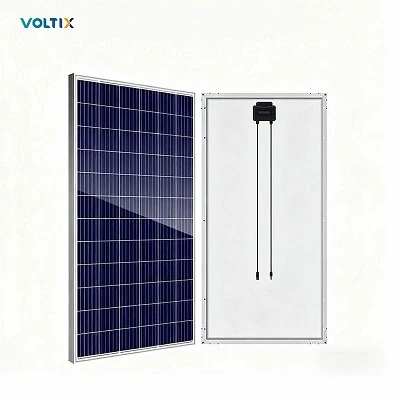
An industrial off-grid solar kit comprises five fully matched subsystems to ensure electrical harmony and prevent component bottlenecking:
Photovoltaic Generation Array:
High-efficiency Monocrystalline PERC or TOPCon solar modules wired in series-parallel strings to match inverter MPPT voltage windows. Equipped with UV-resistant PV1-F DC cabling and IP68 waterproof junction boxes.
Energy Storage Subsystem (BSS):
Grade-A LiFePO4 prismatic cells assembled into modular packs. Features an integrated internal Battery Management System (BMS) providing real-time cell balancing, over-voltage/under-voltage cutoffs, short-circuit protection, and NTC thermistor thermal array monitoring.
Power Conversion & Control Center:
Off-grid inverter-charger unit featuring pure sine wave output, high-frequency isolated or low-frequency toroidal transformers, built-in high-current MPPT solar charge controllers, and programmable AC charger rectifiers.
Balance of System (BoS) & Protection Gear:
DC string combiners equipped with photovoltaic fuse links, Type II Surge Protective Devices (SPD) on both DC and AC sides, DC molded case circuit breakers (MCCB), and lockable ATS isolation switches.
Mounting & Distribution Infrastructure:
Anodized aluminum (AL6005-T5) rail profiles or hot-dip galvanized steel ground/roof racking structures engineered to withstand regional wind-load and snow-load structural standards.
Typical Applications
Rural Telecom Base Stations:
Providing continuous 48V DC and 230V AC power to isolated cellular transceiver towers, eliminating recurring diesel logistics costs and generator maintenance downtime.
Agricultural Water Pumping & Irrigation:
Direct high-surge motor startup for submersible borehole pumps across arid and off-grid farming estates without local electrical utility drops.
Commercial & Industrial Remote Outposts:
Powering remote mining camp administrative modules, oil/gas pipeline telemetry stations, and border security monitoring checkpoints.
Island & Eco-Resort Microgrids:
Centralized utility generation replacing high-carbon fossil fuel generators for hospitality complexes, providing quiet, reliable, 24/7 power autonomy.
Evaluating and sizing an off-grid solar kit requires following a structured engineering workflow:
Calculate Daily Energy Consumption (kWh/day):
Sum the wattage of all connected loads multiplied by their daily operational run-hours. Incorporate an 85% system efficiency derating factor to account for inverter conversion and wiring losses.
Determine Peak Load & Surge Requirements (kW):
Identify simultaneous running loads and motor starting surges (e.g., HVAC units, well pumps). Select an inverter with a continuous power rating exceeding peak load by at least 25%, and a surge capacity of 2x–3x for inductive loads.
Calculate Solar Array Capacity (kWp):
Divide total daily energy consumption (kWh) by the site's average Peak Sun Hours (PSH) per day, factoring in a 1.25 array derating coefficient for temperature losses, dust accumulation, and cable attenuation.
Size Battery Bank Storage (kWh):
Multiply daily energy consumption by the required Days of Autonomy (DoD backup days) divided by the maximum allowable battery Depth of Discharge (typically 80% for LiFePO4) to establish minimum storage capacity.
Verify Environmental & Mechanical Constraints:
Check ambient temperature extremes, wind-load zones, and coastal salt-mist conditions to specify appropriate enclosure IP ratings, thermal heating/cooling pads, and corrosion-resistant mounting hardware.
Customization & Supply
Manufacturing Capabilities & Quality Infrastructure
Production Facility: 20,000+ m² integrated manufacturing base housing automated production lines.
Core Processing Equipment: Equipped with laser welding equipment for high-precision cell busbar connections, automated PACK assembly lines, multi-channel battery cycle testing systems, high-precision automated laminating machines, and EL (Electroluminescence) micro-crack testers for solar modules.
Quality Control & Testing Protocol: Strict quality assurance system adhering to ISO9001 standards. Every battery pack undergoes rigorous cell grading, automated BMS debugging, resistance profiling, and prolonged aging/cycle testing prior to factory release.
Certifications: ISO9001, ISO14001, CE, RoHS, UN38.3, MSDS, and IEC62133 compliance.
OEM/ODM Engineering Services
Electrical Customization: Tailored DC nominal voltages (24V, 48V, 51.2V, 110V, 220V), custom inverter output frequencies (50Hz/60Hz), and proprietary software communication protocol integration (Modbus, CANopen, SNMP).
Structural Adaptation: Custom mechanical footprint designs, containerized mobile solar power stations, and specialized anti-corrosion marine-grade treatments for offshore or high-salinity environments.
FAQ

RFQ
To receive a formal technical proposal and commercial quotation tailored to your project requirements, please provide the following parameters to our engineering team via email at export@voltixbattery.tech:
Daily Power Consumption: Estimated total kilowatt-hours (kWh) required per day.
Load Profile: Maximum continuous load (kW) and peak surge load (kW, e.g., motor pumps, compressors).
Geographical Installation Site: Location/Country (for meteorological insolation data and ambient temperature sizing).
Days of Autonomy: Required backup duration (days) with zero solar generation.
System Voltage & Configuration: Preferred DC voltage (e.g., 48V/51.2V) and phase requirement (Single-phase 230V or Three-phase 400V).
Deployment Type: Ground mount, rooftop, containerized, or pole-mounted telecom setup.
We're well-known as one of the leading off-grid solar kits manufacturers and suppliers in China. With abundant experience, we warmly welcome you to wholesale high quality off-grid solar kits made in China here from our factory. Contact us for more details.