

Product Overview
The Battery Backup Off-Grid Solar Kit is an integrated autonomous power generation and storage system engineered for uninterrupted electricity delivery in remote locations, telecom base stations, and utility-independent residential or light commercial facilities. Built around a complete industrial supply chain encompassing lithium battery PACK production, photovoltaic modules, and hybrid inverter manufacturing, this modular system converts solar radiation into stable alternating current (AC) power while storing surplus energy in a robust lithium iron phosphate (LiFePO4) battery bank.
Key Specifications
|
Technical Parameter |
Specification Value |
|
System Capacity |
5kW to 30kW Scalable Output |
|
Battery Chemistry |
Lithium Iron Phosphate (LiFePO4 / LFP) |
|
Battery Voltage Range |
48VDC / 51.2VDC nominal (scalable up to high-voltage architecture) |
|
Cycle Life |
>= 6,000 cycles at 80% Depth of Discharge (DoD), 25C |
|
Inverter Type |
Pure Sine Wave Hybrid Off-Grid Inverter |
|
PV Input (MPPT) |
Dual/Multi-channel MPPT, voltage range 120VDC-500VDC |
|
Enclosure Rating |
IP55 / IP65 (Outdoor and Indoor deployment) |
|
Communication Protocols |
CAN2.0, RS485, optional Wi-Fi / 4G remote monitoring |
|
Operating Temperature |
-20C to 55C (Automatic thermal throttling/heating integrated) |
Key Product Characteristics
Deep-Cycle LiFePO4 Cell Architecture: Utilizes grade-A prismatic lithium iron phosphate cells paired with an internal Battery Management System (BMS) that monitors cell voltage, temperature, and current balance in real time, preventing overcharge, over-discharge, and short-circuit faults.
Seamless Transfer Switch: Activates emergency backup power within 10 milliseconds upon grid failure or primary input loss, maintaining continuous power for sensitive loads.
Modular Expansion: Supports parallel connection of up to 16 battery units and multiple inverter blocks, allowing procurers to scale energy storage capacity incrementally without rewiring the foundational architecture.
Thermal Management Integration: Features built-in passive aluminum cooling fins and forced-air conduits, preventing thermal runaway and sustaining rated output under high ambient temperatures.
System Architecture & Hardware Components
A standard deployment configuration consists of the following factory-matched hardware subsystems:
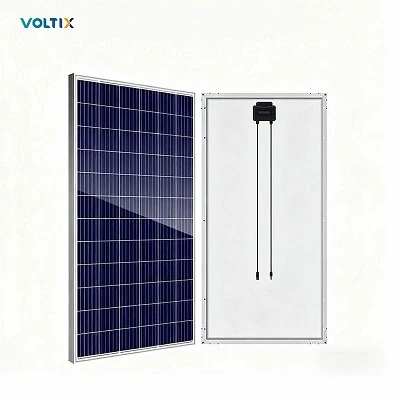
Photovoltaic Array: Monocrystalline N-type TOPCon or Bifacial solar modules with high low-light conversion efficiency.
Hybrid Off-Grid Inverter: Integrates a high-frequency DC/AC inverter, a maximum power point tracking (MPPT) solar charge controller, and a static transfer switch.
Energy Storage Module: Rack-mounted or wall-mounted LiFePO4 battery banks equipped with proprietary active balancing circuits.
Balance of System (BoS): DC/AC overcurrent protection breakers, surge protection devices (SPD Type II), lockable NEMA/IP-rated distribution cabinets, and heavy-gauge PV cabling with MC4 connectors.
Applications
Remote Off-Grid Sites: Providing primary electricity for rural outposts, eco-lodges, and agricultural machinery stations isolated from national grid infrastructure.
Telecommunications Infrastructure: Continuous backup power for cellular towers and remote microwave repeater stations requiring zero tolerance for signal loss.
Commercial & Industrial Microgrids: Peak shaving, load shifting, and emergency backup for small manufacturing units, mining camps, and construction site offices.
Residential Energy Independence: Complete household power autonomy in disaster-prone areas subject to frequent utility grid failures.
Compatibility & Integration
Generator Interfacing: Features dry-contact generator start triggers that automatically signal a diesel or gas backup generator when battery state-of-charge (SoC) drops below user-defined thresholds (e.g., 20%).
Grid-Tied Hybrid Expansion: Supports AC-coupling and DC-coupling topologies, enabling retrofitting into existing diesel-generator setups or net-metered grid infrastructure.
BMS Protocol Integration: Open-communication architecture allows seamless data handshaking with third-party energy management systems (EMS) via Modbus RTU and CANopen protocols.
Supply & Customization Options
OEM/ODM Manufacturing: Custom silkscreen branding, customized enclosure RAL color coatings, and proprietary firmware flashing available for bulk volume orders.
Pre-wired Distribution Skids: Kits can be pre-assembled onto galvanized steel mounting skids or integrated into pre-wired NEMA enclosures to minimize on-site installation labor.
Logistics & Packaging: Export-grade wooden crating compliant with UN38.3 lithium shipping regulations, supporting sea freight and air cargo documentation requirements.
Quality / Testing
Cell Grading and Sorting: Individual cells undergo automated capacity grading, internal resistance matching, and open-circuit voltage screening prior to module welding.
Electrical Stress Screening: Every inverter board undergoes a 4-hour full-load burn-in test at elevated ambient temperatures (45C) to eliminate infant mortality failures.
Environmental Chambers: Fully assembled battery packs are subjected to vibration testing, thermal shock cycling (-20C to 60C), and humidity degradation tests.
Factory Certifications: Production facilities operate under strict compliance with ISO9001 (Quality Management) and ISO14001 (Environmental Management) standards. Hardware models hold CE, RoHS, and UN38.3 test reports.
FAQ
Q: Can this kit be expanded after initial installation?
A: Yes. Additional battery modules of the same voltage rating can be added in parallel. The master BMS automatically detects new capacity upon communication bus synchronization.
Q: What is the exact lead time for bulk B2B container orders?
A: Standard manufacturing and testing lead time ranges from 25 to 35 days post-deposit, depending on customization requirements and raw material availability.
Q: How does the system handle low-temperature charging protection?
A: The integrated BMS automatically disables charging circuits when cell temperatures fall below 0C (unless low-temperature heating films are specified in the order configuration), preventing lithium plating and permanent cell degradation.
Q: What warranty terms apply to the battery bank?
A: Standard commercial warranty covers performance down to 70% retained capacity for 10 years or 6,000 cycles, whichever occurs first under specified operating conditions.
Hot Tags: battery backup off-grid solar kit, China battery backup off-grid solar kit manufacturers, suppliers, factory