

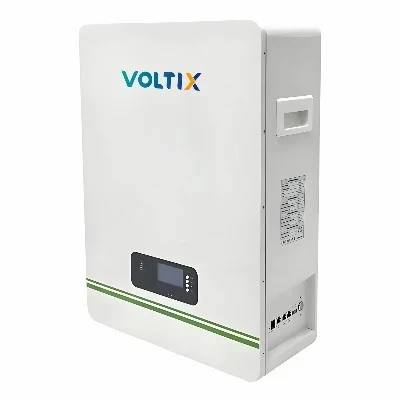
Product Overview
This standalone residential off-grid solar kit delivers independent electrical power for remote or utility-disconnected residential sites. The system integrates photovoltaic modules, an LFP battery storage bank, a hybrid inverter, and mounting hardware into a matched ecosystem. Built for continuous operation in environments lacking grid stability, it converts solar irradiance into regulated AC electricity for household loads while storing surplus energy.
Key Specifications
|
Technical Parameter |
Specification Value |
|
System Capacity Options |
5 kWh to 16 kWh (Scalable) |
|
Battery Chemistry |
Grade-A Lithium Iron Phosphate (LiFePO4 / LFP) |
|
Inverter Output Type |
Pure Sine Wave, Single-Phase AC |
|
Nominal AC Output Voltage |
220V / 230V / 240V (configurable) |
|
PV Module Type |
Monocrystalline PERC / N-Type TopCon |
|
Cycle Life |
>= 6,000 cycles at 80% DoD (25°C) |
|
Operating Temperature Range |
-20°C to 55°C |
|
Enclosure Protection Rating |
IP65 (Inverter and Battery Units) |
|
Certifications |
CE, RoHS, UN38.3, MSDS, IEC62133 compliant |
Key Product Characteristics
Grade-A LFP Cell Architecture: Utilizes stable prismatic lithium iron phosphate cells sourced directly from Tier-1 cell manufacturing lines, preventing thermal runaway and ensuring stable voltage output under high continuous discharge rates.
Integrated Battery Management System (BMS): Real-time monitoring of individual cell voltage, module temperature, and state of charge (SoC). Features hardware-level short-circuit, over-current, and under-voltage protections.
High-Efficiency Power Conversion: Hybrid inverter achieves a maximum conversion efficiency of >= 97.6%, minimizing idle self-consumption and optimizing low-light PV generation capture.
Modular Scalability: Supports parallel expansion up to multiple battery clusters, allowing distributors to scale storage capacity post-installation without replacing existing cabling or inverter hardware.
System Architecture & Subsystems
A complete factory-configured kit comprises:
Solar PV Array: High-efficiency monocrystalline panels equipped with pre-attached MC4 connectors and bypass diodes.
Hybrid Inverter / Charge Controller: MPPT-integrated inverter combining solar charge regulation, DC-AC inversion, and grid/generator fallback terminals.
Energy Storage Unit (ESS): Stackable or wall-mounted LFP battery modules with internal busbars and communication harness.
Balance of System (BOS): DC/AC surge protection devices (SPDs), DC molded case circuit breakers (MCCBs), specialized solar cables (4 mm² / 6 mm²), and aluminum roof/ground mounting rails.
Applications
Remote Off-Grid Residences: Primary electricity generation for cabins, homesteads, and rural houses lacking physical grid infrastructure.
Unstable Grid Backup: Automatic switchover power supply for regions prone to frequent blackouts, protecting critical loads like refrigeration and water pumps.
Eco-Tourism & Modular Housing: Decentralized micro-grid deployment for container homes, eco-lodges, and mobile dwelling units.
Compatibility & Integration
Generator Interfacing: Dry-contact signal output enables automatic start/stop control for auxiliary diesel or gas backup generators during extended low-insolation periods.
Communication Protocols: RS485, CAN 2.0, and optional Wi-Fi/4G modules for remote telemetry, firmware updates, and integration with third-party EMS (Energy Management Systems).
Load Compatibility: Designed to handle inductive loads (e.g., well pumps, air compressors, refrigerators) up to the inverter's peak surge rating (2x rated capacity for 5 seconds).
Supply & Customization Options
Manufacturing Scale: Backed by a 20,000+ m² production facility featuring automated laser welding lines, surface mount technology (SMT) PCB assembly, and an annual battery pack capacity of 1 GWh.
OEM / ODM Services: Custom firmware integration, private-label silk-screening on inverter chassis, custom battery enclosure dimensions, and localized manual documentation.
Packaging & Logistics: Palletized, sea-freight-optimized packaging compliant with UN38.3 dangerous goods transport regulations for lithium batteries. Minimum Order Quantity (MOQ) and container load plans available upon direct technical inquiry.
Quality / Testing
Cell Grading & Matching: Internal resistance and capacity sorting prior to module pack assembly to prevent internal current imbalances.
End-of-Line (EOL) Testing: Every inverter undergoes a 4-hour full-load burn-in test at elevated ambient temperatures. Battery packs pass automated BMS calibration, dielectric strength testing, and functional cycling.
Traceability: Barcode tracking applied to individual cells, BMS boards, and finished PACK assemblies, referencing records maintained under ISO9001 and ISO14001 quality management standards.
FAQ
Q: Can this kit run a central air conditioner or heavy HVAC loads?
A: Continuous load capability depends on the selected inverter wattage (typically 3kW to 10kW per unit). Heavy inductive loads require verifying the inverter's surge rating and starting current requirements. Parallel configuration is recommended for multi-ton HVAC systems.
Q: What is the required maintenance schedule for the LFP battery bank?
A: The LFP modules are maintenance-free. Active balancing occurs automatically via the BMS during charge cycles. Firmware updates and terminal torque checks are recommended annually.
Q: How does the system perform in sub-zero winter conditions?
A: Integrated low-temperature charging protection inhibits charging when internal cell temperatures drop below 0°C unless an optional low-temperature heating film module is specified during order configuration. Discharge functions normally down to -20°C.
Q: What documentation is provided for local grid or safety compliance?
A: Complete test reports (UN38.3, CE, RoHS, IEC62133) and factory calibration sheets are supplied with every shipment to streamline local import customs and electrical inspection approvals.
Hot Tags: residential off-grid solar kit, China residential off-grid solar kit manufacturers, suppliers, factory