

Product Overview
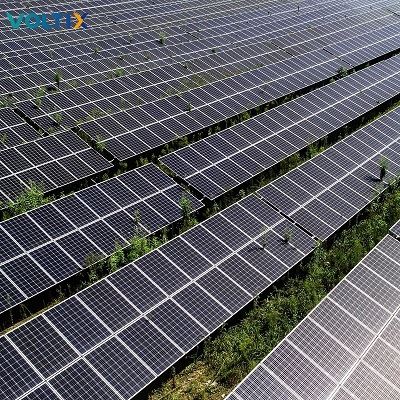
This system integrates photovoltaic (PV) generation input, lithium iron phosphate (LiFePO4) battery storage, and bi-directional inverter control into a single architecture. It regulates power dispatch between solar arrays, energy storage units, local loads, and the utility grid. Manufactured in a 20,000+ m2 production facility with an annual battery pack capacity of 1 GWh, the unit is engineered for commercial, industrial, and residential microgrids requiring automated load shifting, peak shaving, and uninterrupted backup power.
Key Specifications
|
Technical Parameter |
Specification Value |
|
Cell Chemistry |
Grade-A LiFePO4 (Lithium Iron Phosphate) |
|
System Capacity Range |
5kWh to 16kWh (Wall-mounted/Stacked Residential); Up to 261kWh (Commercial Modular/C&I Cabinets) |
|
Cycle Life |
6,000+ cycles at 80% Depth of Discharge (DoD) at 25°C |
|
Inverter Compatibility |
Hybrid & Off-grid inverters (DC/AC coupling supported) |
|
Communication Protocols |
CAN 2.0, RS485, Modbus RTU, Ethernet (EMS integration) |
|
Operating Temperature |
-20°C to +55°C (Automatic thermal management integration) |
|
Certifications |
ISO9001, ISO14001, CE, RoHS, UN38.3, IEC62133 compliance |
Key Product Characteristics
Cell Sorting & Consistency: Automated cell grading machines sort lithium-ion cells by capacity and internal resistance prior to assembly, minimizing cell imbalance during deep-cycle operations.
Structural Integration: Enclosures utilize heavy-gauge sheet metal with weatherproof gasket sealing, protecting internal components against moisture and dust ingress in outdoor installations.
BMS Architecture: Multi-tier Battery Management System (BMS) continuously monitors individual cell voltages, pack temperature, and current throughput to prevent overcharging, deep discharge, and thermal runaways.
Thermal Regulation: Air-cooled and liquid-cooled configurations maintain uniform cell temperatures, mitigating degradation across high-ambient-temperature deployments.
Core Architecture and Design
Core Subsystems: PV combiner interface, bi-directional power conversion system (PCS), LFP battery rack, BMS master/slave controllers, and central Energy Management System (EMS) HMI.
Electrical Layout: Pre-wired internal busbars, integrated DC/AC circuit breakers, surge protection devices (SPD), and emergency hardware trip loops.
Mechanical Build: Modular rack-mount battery modules combined with a floor-standing or wall-mounted master control cabinet, utilizing automated laser welding for internal current collectors.
Applications
Commercial & Industrial (C&I) Peak Shaving: Discharges stored energy during peak utility tariff windows to suppress maximum demand charges.
Commercial Load Shifting: Stores low-cost grid or excess solar energy during off-peak hours and utilizes it during high-rate periods.
Telecom Backup Power: Provides stable DC/AC microgrid support for remote cellular towers prone to unstable local grid infrastructure.
Off-Grid Microgrids: Acts as the primary frequency and voltage regulation source for isolated rural communities or remote industrial sites.
Compatibility & Integration
Inverter Integration: Compatible with standard high-voltage and low-voltage hybrid inverters through open-protocol CAN/RS485 communication.
SCADA & EMS Interoperability: Supports Modbus TCP/IP protocols for integration into third-party plant controllers and energy management software.
Retrofit Capabilities: Can be coupled with existing solar PV installations via AC-coupling topologies without rewiring existing generation arrays.
Supply & Customization Options
OEM/ODM Engineering: Custom enclosure dimensions, custom paint finishes, and tailored BMS firmware logic available for volume procurement.
Capacity Scalability: Modular rack designs allow parallel expansion of battery banks up to MWh-scale deployments.
Logistics & Packaging: UN38.3 certified packaging compliant with hazardous material shipping regulations for ocean and land freight.
Quality / Testing
In-House Verification Lines: Every production batch undergoes automated optical inspection (AOI), laser weld integrity checks on automated assembly lines, and high/low-temperature environmental chamber testing.
Cyclic Performance Validation: Automated battery cycle testing systems execute continuous charge-discharge profiling to verify capacity retention before final packaging.
Quality Frameworks: Production operations strictly conform to ISO9001 quality management mandates and ISO14001 environmental safety protocols.
FAQ
Q: What is the standard lead time for volume orders?
A: Standard production run lead times range from 4 to 6 weeks, depending on customization requirements and order volume.
Q: Can the EMS integrate with local building management systems (BMS/SCADA)?
A: Yes, the system exports standard Modbus RTU and Modbus TCP/IP data points over RS485 and Ethernet ports for seamless SCADA integration.
Q: What documentation is provided for international import compliance?
A: Full documentation packages include UN38.3 test summaries, MSDS, CE certificates, IEC compliance test reports, and factory calibration certificates.
Hot Tags: pv & battery energy management system, China pv & battery energy management system manufacturers, suppliers, factory