

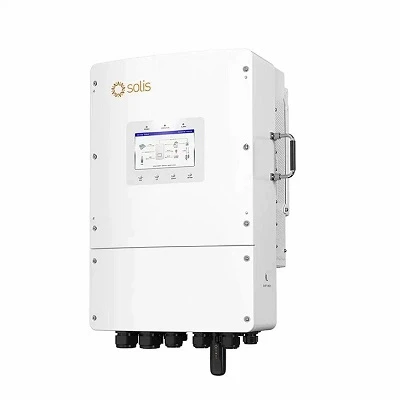
Product Overview
The Residential Energy Management System (REMS) is an integrated, floor-standing solar-storage solution engineered to optimize household power distribution, deliver uninterrupted backup protection, and maximize self-consumption of renewable energy. By consolidating a high-capacity lithium iron phosphate (LiFePO4) battery pack and a bidirectional hybrid inverter into a single, compact enclosure, the system minimizes energy conversion losses and simplifies deployment for residential and small-scale light commercial applications.
Key Specifications
|
Technical Parameter |
Specification Value |
|
Battery Chemistry |
Lithium Iron Phosphate (LiFePO4) |
|
Total Energy Capacity |
10.1 kWh (9.6 kWh Usable) |
|
Rated Continuous Output Power |
5.0 kVA |
|
Peak Output Power |
10.0 kVA (less than 60 seconds) |
|
Nominal AC Voltage |
220V / 230V / 240V Single-Phase |
|
Grid Frequency |
50Hz / 60Hz |
|
Max. PV Input Power (Hybrid Model) |
10 kW |
|
MPPT Operating Voltage Range |
100V to 550V |
|
Maximum System Efficiency |
Up to 97.3 percent |
|
Ingress Protection Rating |
IP65 (Weatherproof for indoor/outdoor installation) |
|
Operating Temperature Range |
-20 C to +55 C |
|
Design Scalability |
Parallel connection up to 6 units (approximately 60 kWh) |
Key Product Characteristics
Prismatic LiFePO4 Cell Architecture: Utilizes rigorously graded prismatic cells selected through automated voltage and internal resistance sorting to ensure balanced aging and enhanced thermal stability.
Integrated Battery Management System (BMS): Real-time cell-level voltage monitoring, temperature tracking, overcharge/over-discharge protection, and active balancing to optimize cycle life.
High-Frequency Bidirectional Conversion: Advanced topology switching design yielding a peak efficiency of 97.3 percent, reducing idle self-consumption and thermal dissipation.
Robust Enclosure Construction: Fabricated using cold-rolled steel housing treated with anti-corrosion powder coating, rated at IP65 for reliable deployment in diverse climatic environments.
System Architecture & Components
Power Conversion Unit (PCU): Incorporates dual MPPT tracker inputs and high-speed switching transistors for fast grid-to-battery and solar-to-load transitions (less than 10ms).
Energy Storage Module: Stackable internal DC architecture operating at a nominal voltage of 96V, engineered for straightforward field servicing.
Communication Gateway: Supports RS485, CAN2.0, and optional Wi-Fi / 4G modules for remote firmware updates and telemetry logging.
Applications
Residential Solar Self-Consumption: Stores excess daytime photovoltaic generation to power household loads during evening peak tariff hours.
Uninterruptible Power Supply (UPS) Backup: Automatically switches to islanded mode during grid outages, sustaining critical loads such as refrigeration, lighting, and communication routers.
Time-of-Use (TOU) Arbitrage: Automatically charges during low-cost grid windows and discharges during high-tariff periods to minimize electricity expenditure.
Off-Grid Microgrids: Deployed as the central energy hub in remote rural electrification projects paired with backup auxiliary generators.
Compatibility & Integration
Inverter Protocols: Compatible with standard third-party photovoltaic arrays via AC-coupled configurations or direct DC connection through built-in dual MPPT channels.
Grid Standards Compliance: Configurable grid profile settings matching local utility interconnection rules, including zero-export capability and frequency-watt / volt-watt response curves.
EMS Integration: Open communication APIs (Modbus TCP/RTU) for integration with home automation hubs and virtual power plant (VPP) aggregation platforms.
Supply & Customization Options
Enclosure Customization: OEM/ODM private labeling, customized sheet metal color finishes, and localized silkscreen branding.
Firmware Localization: Pre-configured regional safety parameters, grid frequency thresholds, and language packages prior to dispatch.
Packaging and Logistics: Export-grade reinforced wooden crating designed for ocean and land freight transit safety.
Quality / Testing
Manufacturing Standards: Produced under strict adherence to ISO9001 quality management and ISO14001 environmental management systems.
Factory Acceptance Testing (FAT): Every unit undergoes automated cell grading, multi-channel automated PACK assembly inspection, BMS calibration, and high-current charge-discharge cycle burn-in tests.
Compliance Certifications: Certified to CE, RoHS, UN38.3, MSDS, and compliant with IEC62133 safety requirements for secondary lithium cells.
FAQ
Q: What is the expected calendar and cycle life of the system?
A: The system utilizes high-grade LiFePO4 chemistry designed to retain over 70 percent of its nominal capacity after 6,000 standard charge-discharge cycles under recommended thermal operating conditions.
Q: Can multiple units be connected in parallel to increase capacity?
A: Yes. The system supports modular expansion of up to 6 identical units in parallel, scaling total storage capacity up to approximately 60 kWh without requiring external controller hardware.
Q: What maintenance procedures are required during operation?
A: The system is virtually maintenance-free. Routine operations involve periodic remote software checks via the telemetry platform and visual inspection of ventilation clearances and cable terminal torque annually.
Q: What is the typical lead time for bulk wholesale orders?
A: Standard production lead times range from 25 to 35 days depending on order volume and custom labeling requirements. Express sample delivery options are available upon technical evaluation.
Hot Tags: residential energy management system, China residential energy management system manufacturers, suppliers, factory